Showing posts with label Law of God. Show all posts

Tuesday, August 28, 2018

Timothy, Be Continuously Nourished in God's Word (1 Timothy 4:6)


"If you explain these things to the brothers and sisters, Timothy, you will be a worthy servant of Christ Jesus, one who is nourished by the message of faith and the good teaching you have followed"
(1 Timothy 4:6, NLT)

All commentary that I read agree that the phrase "if you explain these things to the brothers" is a mild term. Modern King James Version (MKJV) puts it this way, "Having suggested these things to the brothers…” and New King James Version (NKJV) says, "If you instruct the brethren in these things…" Explain, suggest, instruct. I wonder, why Paul did not write to Timothy to ‘command' these things to the brothers? I think, since Timothy was quite a young man, it probably not good for him to exercise authority by giving orders to the believers at Ephesus. He might be resented and rejected by them. Paul counseled a suggestion rather than a command. Paul already does the hard part, Timothy only needs to explain it to them. Paul warned them, Timothy only need to deliver the warning. Paul wrote the letter, Timothy only needs to read it to them. What Paul wants Timothy to explain? Read the previous article or read 1 Timothy 4:1-5:

"The Spirit makes it clear that as time goes on, some are going to give up on the faith and chase after demonic illusions put forth by professional liars. These liars have lied so well and for so long that they've lost their capacity for truth. They will tell you not to get married. They'll tell you not to eat this or that food – perfectly good food God created to be eaten heartily and with thanksgiving by Christians! Everything God created is good, and to be received with thanks. Nothing is to be sneered at and thrown out. God's Word and our prayers make every item in creation holy"
(
The Message).

If Timothy explains this, he would be "a worthy servant of Christ Jesus." Paul wanted Timothy to warn the Ephesian-Christians of false teachings and apostasy, and to faithfully teach sound doctrine. H. A. Ironside commented, "The minister of Christ is responsible to bring these things to bear upon the hearts and conscious of the people of God so that He may be honored and they may be preserved from the unholy teachings which Satan uses to lead many astray." But you see, the best defense is a good offense. The best antidote to false teaching and apostasy is to know and preach the truth of God. We "know the truth"! (see 1 Timothy 4:3) Even so, as Paul tells Timothy, we must be continuously "nourished" in the truth, namely, God's Word or "the message of faith and the good teaching." Actually, the verb here means "constantly nourishing up." Just as we need daily food to keep us going physically, so it is, as God's people, we need daily spiritual food if we are to remain strong and grow spiritually. Why people are easily "turn away from the true faith" and "follow deceptive spirits and teachings" (1 Timothy 4:1)? Because they have become weak spiritually and failed to continuously nourish in God's Word.

Maybe that's why Paul in his second letter to Timothy reminded him to "work hard so you can present yourself to God and receive his approval. Be a good worker, one who does not need to be ashamed and who correctly explains the word of truth" (2 Timothy 2:15). If Timothy is faithful in his responsibility to warn others about "these things" (4:6), he will continue on the right path because this is the one which he "has followed" up to now. Great teacher and Bible commentator, Matthew Henry, said this to ministers like Timothy (no excuse, to us too!): "Even ministers themselves have to need to be growing and increasing in the knowledge of Christ and his doctrine: they must be nourished up in the words of faith" [and] "the best way for ministers to grow in knowledge and faith is to put the brethren in remembrance; while we teach others, we teach ourselves." I'm encouraged!


THINK BIG. START SMALL. GO DEEP.
Best Blogger Tips

Monday, October 23, 2017

Timothy, the Law Is for Men who Practice Homosexuality But... (1 Timothy 1:8-11)


Now we know that the law is good, if one uses it lawfully, understanding this, that the law is not laid down for the just but for the lawless and disobedient, for the ungodly and sinners, for the unholy and profane, for those who strike their fathers and mothers, for murderers, the sexually immoral, men who practice homosexuality, enslavers, liars, perjurers, and whatever else is contrary to sound doctrine, in accordance with the gospel of the glory of the blessed God with which I have been entrusted
(1 Timothy 1:8-11, ESV)

The law is good and useful. Useful for who? Not for the righteous, but for the unrighteous. Here Paul lists to Timothy those to whom the law applies and for whom it was made. It is interesting that the list falls into two categories, sins against God (“but for the lawless and disobedient, for the ungodly and sinners, for the unholy and profane”) and sins against one another (“for those who strike their fathers and mothers, for murderers, the sexually immoral, men who practice homosexuality, enslavers, liars, perjurers”). This led me to believe that Paul is referring to the pattern of the Mosaic Law, especially the Ten Commandments which fall into the same two divisions or categories.

First on the list are “the lawless and disobedient.” Those who don’t recognize law or rebel against the constituted authority (read Matthew 24:12) and those who have the do-my-own-thing attitude. The disobedience reminds me of Judges 21:25: “Everyone did what was right in his own eyes.” Then Paul moves to “the ungodly and sinners.” Though many people may not openly deny the existence of God, their lives demonstrate that God is nonexistent or they don’t consider God to be relevant, personal, or important. The ungodly is more of passive inaction whereas the sinners are actively rebels against God. This is followed by those who are described as “the unholy and profane.” Because of ungodliness, the thought that God is holy and righteous is far from their minds and hearts. Holiness is a strange word and concept. And because the righteousness, glory, and holiness of God are unknown, profanity, which simply means “trampling on that which is holy,” come next (remind me of Romans 3:18).

Paul now turns to sins against one another. “For those who strike their fathers and mothers, for murderers” those who did exactly what it is said. No sense of God’s holiness breeds no sense of respect for others, even to parents. Thus, no respect will result in seeing others as no value… so murdering those who bear the image of God is easy. Then Paul turns to sexual sins. “The sexually immoral.” There are two common words related to sexual immorality in the Bible: fornication and adultery (if you read the Book of Hosea, the common word is “whoredom”). I often differentiate them this way: fornication refers to sexual sin before marriage (premarital sex) and adultery refers to the same sin after marriage (having sex with someone other than his/her spouse). And then he touches on the most common sin during Timothy’s time but becoming very sensitive today “men who practice homosexuality.” Sadly, homosexuality has become accepted as a way of life today. We read news of homosexual churches, homosexual ministers/pastors/priests, and homosexual wedding ceremonies. Though I sympathize with those who struggle with homosexual tendencies but actively practicing homosexual relationships is a sin. Direct and clear.

Paul continues his list by mentioning “enslavers.” My ESV Bible footnote explains that enslavers are “those who take someone captive in order to sell him into slavery”. Kidnapping is a form of enslaver. It was estimated that nearly 4,000 Malaysian children went missing in 2014-2015 and no doubt that most of them are victims of human trafficking! Very sad. Finally, “liars, perjurers” complete the list of sins specifically named. Lying is an accepted way of life in much of the world today, even among those who professed to be Christians. A white lie, black lie, yellow lie – all lies! This kind of lying is selfish, irresponsible, and deceiving. Then, for all other sins against God and one another Paul included them all under “whatever else is contrary to sound doctrine” (read previous articles about sound doctrine). I noticed that Paul did not say “whatever else is contrary to sound action” but rather “contrary to sound doctrine.” What a person believes – faith and theology/doctrine – determines how he lives.

This is the use of the law of God: to show that all of the above are the result of human unrighteousness. By law we are damned! But have hope and be joyful for Paul – and all the prophets and apostles – “have been entrusted” with “the gospel of the glory of the blessed God.” We can put our trust in their writings because they simply wrote the truth that God had entrusted them to deliver and proclaim. God’s glory is in Jesus Christ the Son of God. “He is the radiance of the glory of God” (Hebrews 1:3). Thus, it is the gospel of Jesus Christ that Paul is proclaiming! In Christ, we move from law to grace; from bondage to freedom; from unrighteousness to righteousness. The law is good, but the grace of God is wayyyyyyyyyyyy better! Amen.


THINK BIG. START SMALL. GO DEEP.
Best Blogger Tips

Saturday, October 21, 2017

Timothy, the Law of God is Very Good and Useful (1 Timothy 1:8-9)


Now we know that the law is good, if one uses it lawfully, understanding this, that the law is not laid down for the just but for the lawless and disobedient…
(1 Timothy 1:8-9, ESV)

Be clear, the apostle Paul is not speaking against the law here. He is against those who using the law improperly. He emphasizes the goodness of the law even in Romans 7:7-12: “What then shall we say? That the law is sin? By no means! ...the law is holy, and the commandment is holy and righteous and good.” If you’re familiar or have read letters of Paul to Galatians and Romans (or read thru the New Testament), you’ll realise that there were those who would seek to dilute the doctrine of salvation by grace alone by making the law as part of salvation or a rule of life for the Christians. It seems that our human nature want to “do something” to merit salvation. I assure you, this is true whether it be Jewish law-keeping in Timothy’s time or whether it be the salvation-by-works of the ‘Christian’ cults and major religions of the world today. The God of the Bible will have none of this! Salvation is by God’s grace alone through faith (Ephesians 2:8-9) and based upon the sacrifice of His Son on the cross. God’s grace + nothing = our salvation!

But know this too: “the law is good, if one uses it lawfully” (v.8). Paul then tell Timothy the proper use of the law and its purpose. Simply put, the law is made for unrighteous people. I once watched a documentary on how to make padlock on YouTube. I was fascinated by the mechanical engineering and many details that went into the making of padlocks. There are varieties of padlocks manufactured for specific use for different needs. Some are for shops and businesses, some for private homes and vehicles, and so on and so forth. Now a thought came to me as I recalled the documentary: “Padlocks are needed because there are thieves and trespassers.  If there were no law-breakers, padlock factories would be out of business!” If all men were good men then there is no need for locks on doors, either to keep men in or out. The facts that there are crimes mean men are trustworthy and lawless. We need laws today even more than ever before. The law was not made for righteous men but for unrighteous.

As for salvation, the law is useless; but as for Christian living, the law is useful. I don’t want to be like hyper-grace teachers who say that the law is no longer necessary and is only useful as shadows and types that point us to Christ. Nor I want to be the legalists who overstate the role of the law and put Christians in bondage. All I’m saying is, like Paul to Timothy, that the “law is good.” It was Martin Luther who said, “The first duty of the gospel preacher is to declare God’s Law and to show the nature of sin because it will act as a school master and bring him to everlasting life which is in Jesus Christ.” It was John Wesley who said, “Before I preach love, mercy and grace, I must preach sin, Law and judgment.” It was Charles Spurgeon who said, “They will never accept grace until they tremble before a just and holy Law.” It was John Wycliffe who said, “The highest service to which a man may attain on earth is to preach the Law of God.” John Stott wrote, “We cannot come to Christ to be justified until we’ve first been to Moses to be condemned.  Once we have gone to Moses and acknowledged our sin, guilt and condemnation, we must not stay there, we must leave Moses and go to Christ.”

THINK BIG. START SMALL. GO DEEP.


Best Blogger Tips

Monday, October 16, 2017

Timothy, Stay Away From Those Who Swerved from the Simplicity That Is In Christ (1 Timothy 1:6-7)


Certain persons, by swerving from these, have wandered away into vain discussion, desiring to be teachers of the law, without understanding either what they are saying or the things about which they make confident assertions
(1 Timothy 1:6-7,
ESV)

[Read previous articles on 1 Timothy to get the context and background of these verses]. “Certain persons,” Paul writes first in verse 3 then here in verse 6 are not named. No doubt, these people are self-appointed teachers of verse 3 who were teaching “different doctrine” or “other doctrine.” They have “swerving” (Some Bibles translated as “having strayed” or “having deviated”), completely missing the mark when it comes to sound doctrine. Paul says they have turned aside.

I read one commentary, the writer explains that this is a medical term which means “to turn or twist.” Like twisting your ankle. This wasn’t something you laughed about. In my own experience, twisting my ankle causes me to scream in pain. It brought tears to my eyes. Such a painful experience! You had experienced it too, right? This is what these false teachers were doing to the body of Christ. This was no “mere trifling in splitting theological hairs” as some say. It was a serious departure from sound doctrine. Painful and seriously dangerous. The result was “wandered away into vain discussion,” meaning a lot of words that didn’t say anything or lead anyway. Theological debates here and there, bla bla bla. How many times I have listened to the empty preaching of some high-educated preacher who, as Vance Havney says, practiced “the art of almost saying something.

These false teachers who had influenced Timothy’s church at Ephesus professed to be specialists and experts. They “desiring to be teachers of the law” claiming to be experts in the Old Testament law. Although they presented themselves as those who have authority, they actually didn’t know what they were talking about. They were “without understanding either what they are saying or the things about which they make confident assertions.” Their teaching led in circles and went nowhere, but what they stated they did so with great force and confidence.

They know not what they say or what kind of things they are of which they speak so confidently. Just because someone shouting and stomping in the pulpit and goes through all sorts of gestures when preaching doesn’t mean he or she is saying much or preaching the truth. Or just because someone so confidently claiming themselves a Calvinist or Arminian on Facebook and quoting a famous saying of reformers and preachers of old, it doesn’t mean he or she is a true follower of Christ. It’s sound doctrine that counts! The false teachers had swerved from the simplicity that is in Christ. H.A. Ironside writes, “It is ever the object of the Devil to obscure the truth and get Christians occupied with something that will hide the glorious face of the Lord Jesus Christ and becloud the truth regarding His finished work.” Again, it’s sound doctrine that counts!


THINK BIG. START SMALL. GO DEEP.
Best Blogger Tips

Wednesday, April 6, 2016

Jesus on Divorce: Glued Together, No One can Separate It (Mark 10:1-9)


Jesus then left that place and went into the region of Judea and across the Jordan. Again crowds of people came to him, and as was his custom, he taught them. Some Pharisees came and tested him by asking, ‘Is it lawful for a man to divorce his wife?’ ‘What did Moses command you?’ he replied. They said, ‘Moses permitted a man to write a certificate of divorce and send her away.’ ‘It was because your hearts were hard that Moses wrote you this law,’ Jesus replied. ‘But at the beginning of creation God ‘made them male and female.’ ‘For this reason a man will leave his father and mother and be united to his wife, and the two will become one flesh’. So they are no longer two, but one flesh. Therefore what God has joined together, let no one separate’
(Mark 10:1-9,
NIV).

The subject of divorce was a hot issue in Jesus’ day as it is today. According to the Old Testament, a man could divorce his wife if she “displeasing to him because he finds something indecent about her” (Deuteronomy 24:1). But by the time Jesus came there were two conflicting views about divorce among the Jews, all because of two ways to interpret the word “indecent” in Deuteronomy 24:1. Mostly the Pharisees said that indecency referred only to sexual unfaithfulness, meaning, a man could divorce his wife only if she became sexually involved with another man. A second view interpreted it as anything that displeased the husband. For example, a man could divorce his wife if she displeased her husband by burning his toast!

The Pharisees, wanted to find some reason to accuse Jesus and get rid of Him, asked Him what was His interpretation of divorce. They were probably hoping that Jesus held the more ‘open’ view of divorce; that way they could discredit Him among the religious community for His liberal interpretation of Scripture. But Jesus doesn’t sided with any one of the two views, Jesus said that in God’s view of marriage, divorce is not mention. When Jesus quoted Genesis 2:24, he implied that in God’s original blueprint for marriage in the Garden of Eden, husband and wife were to be glued (“become one flesh”) into one, inseparable unit. That’s it! Divorce wasn’t even in the vocabulary. “What God has joined together, let no one separate.”

So, why did God allow Moses to include a divorce certificate in the Old Testament law? Jesus answered: “It was because your hearts were hard.” When sin entered the human race as described in Genesis 3, men became basically selfish, unloving and reluctant to forgive in all of relationships – including marriage. The life of “one flesh” God intended husband and wife to enjoy often end up with two self-centred individuals. Instead of caring for each other selflessly, individuals care for themselves first. So for the man who was too hard-hearted to forgive his wife, for example, for being unfaithful, God allowed divorce. Because once sin entered the picture, nothing will be the same. But we must remember that God’s number one plan for marriage is that they commit themselves to each other with selfless love and forgiveness.

Now, I’m not married yet. Soon. But as I read this text in Mark 10 long time ago, I have to consider and equip myself for marriage. This is what I learned: The only kind of glue (to be “one flesh” means to literally glue two objects into one) that holds a marriage together is the glue of commitment. Commitment means that you give yourself to your partner in marriage as a permanent gift; and the two of you give yourselves to God as one. This kind of glue bonds people together so that they can endure all the pressing, pulling and stretching that life can inflict on them. Commitment to one another is above the romantic feelings; it is a committed-choice to stick with one another no matter what happen. If I may respectfully paraphrase Jesus’ words this way: “What God has glued together, man won’t want to separate by divorce.” Amen.

If you try to separate two objects that are glued together,
It’s hard to do, and it ‘hurt’ because each will never be the same again.
That’s the effect of divorce
(P.s: I know it’s hurt, my parents divorced few years ago)

THINK BIG. START SMALL. GO DEEP.
Best Blogger Tips

Sunday, January 31, 2016

Jesus on Holiness and Sin and Our Traditions (Mark 7:1-23)


So the Pharisees and teachers of the law asked Jesus, ‘Why don’t your disciples live according to the tradition of the elders instead of eating their food with defiled hands?’ He replied, ‘Isaiah was right when he prophesied about you hypocrites; as it is written: ‘These people honour me with their lips, but their hearts are far from me. They worship me in vain; their teachings are merely human rules.’ You have let go of the commands of God and are holding on to human traditions’
(Mark 7:5-8,
NIV).

Ever since God said, “Be holy because I, the LORD your God, am holy” (Leviticus 19:2), His people have busied themselves writing lists of rules, regulations and codes of behaviour to enforce holiness in each other’s daily lives. By the time of Jesus, the Jews had a total of 613 specific “tradition of the elders” (Mark 7:3) which had been passed on from generation to generation since Moses. These were not Old Testament laws given and inspired by God, but they were rules and regulations the well-meaning religious leaders devised in an attempt to apply God’s law to specific daily situations.

By the New Testament times the tradition of the elders had become so ridiculous in their demands on the poor ordinary Jews that it was almost comical. Mark 7:1-4 is an example of just one tradition that stated that anyone who was not a Jew was considered unclean to the Jews. So, the tradition required the Jews to wash themselves after they “come from the marketplace.” Another tradition stated that even the shadow of a Gentile (non-Jew) passing over their kitchen utensils made the utensils unclean! Jesus was unimpressed by the Pharisees’ and scribes’ external show of “holy” behaviour. When they questioned him as to why his disciple ignored the tradition of ceremonial washing, Jesus quoted Isaiah 29:13 implying that his accusers had a lot of external holiness to “show” but were far from God in their hearts. The self-righteous Jews were so intent on following their own rules that Jesus said they have “let go of the commands of God” but instead “holding on to human traditions.”

The Pharisees made a basic error about holiness. By their behaviour they were saying that holiness was something a person do outside of his life by right conduct. “Obey the rules, do the best you can, pray three times a day or more and you’ll be holy,” they seemed to say. But according to Jesus, the Pharisees and teachers of the law, or anyone who followed their own line of thinking about holiness is far from the truth. The New Testament shows that holiness must be an attitude of the heart before it can affect the external appearances. Furthermore, sanctification – the act or process of being made or becoming holy – is not something a person does but rather something a person receives by being a believer in Jesus Christ (see 1 Corinthians 6:11, Hebrews 10:10, and more). God makes us holy as a result of our faith in Christ. Our holy actions are by-products of God-given holiness, not by attempts to achieve holiness by ourselves.

The Jews made a similar mistake about sin. To them (even for some of us), sin was an external defilement such as contact with something or someone unclean. Jesus said, “Nothing outside a person can defile them by going into them. Rather, it is what comes out of a person that defiles them” (Mark 7:15). Sin is the opposite of holiness. Both is basically an attitude of the heart. Holiness springs from an attitude of Christ-centeredness and results in loving God and people. Sin, however, springs from an attitude of self-centeredness and results in selfishness which hurts and takes advantage of people.

It’s surprising how many Christians today read of the errors the Pharisees made regarding holiness and sin, shake their heads in disgust and then fall into the very same trap. We seem to get side-tracked keeping our own “holy traditions” while ignoring the lifestyle of love for God and people that is to be the basis of all commandments. Here are some of obvious “holy traditions” today: kissing the Pope’s feet and Jesus’ statues, Holy Water and pray for the Saints, Rosary prayer and bow down to the Cross, fasting on Friday and the Mass, lighting candles and singing hymns only, the use of olive oil to anoint ministers, father’s special sit, priests began to dress differently from the laity, Luther’s and Calvin’s doctrines become the standard to interpret the Scriptures, etc. (Type ‘amen’ on Facebook also have becoming people’s tradition today). There are also the not-so-obvious traditions that we unconsciously follow today. By the way, Jesus did not mean that all traditions, rules and regulations are to be tossed out. For example, the traditions of praise & worship before sermon and reading the Bible three chapters a day can be very beneficial. These and many more are not necessarily bad or sinful. But if the traditions become for us a substitute for the holiness which God produces in our lives, then they have become too important and we could correctly be labelled as “Pharisee.”

If God has made you holy from the inside out,
then let your holy obedience-action to God’s Word show it.

THINK BIG. START SMALL. GO DEEP.
Best Blogger Tips

Tuesday, December 29, 2015

Jesus the Perfect Saviour wants Us to Take Sin Very Seriously (1 John 3:4-7)


Everyone who sins is breaking God’s law, for all sin is contrary to the law of God. And you know that Jesus came to take away our sins, there is no sin in him. Anyone who continues to live in him will not sin. But anyone who keeps on sinning does not know him or understand who he is. Dear children, don’t let anyone deceive you about this: When people do what is right, it shows that they are righteous, even as Christ is righteous
(1 John 3:4-7, NLT).

The Apostle John is dealing again with the question of sin. Even though he was kind and gentle (tradition says that he was called “the Apostle of love”), he could also be strong and direct (earlier he was called “the son of thunder” after all). Without being afraid of offending everyone else, John reminds us most bluntly that sin is not something to wink at – instead sin is lawlessness and active rebellion against God. Sin is “breaking God’s law” and “contrary to the law of God.” To sin is to obey oneself rather than God and shows that something is wrong in our relationship with God. We “keep on sinning” because we didn’t continue to live in Jesus. Please take sins seriously.

Friends, when it comes to sin, one possible explanation is that God’s Word (they say) is just too difficult for people to understand or obey; so they use that as an excuse for doing whatever they want to do. But God has promised that what He asks for us will not be impossible; in fact, God promises to give us the strength and confidence to do what is right. What God commands, He also enables us to obey it. John here also says that we “keep on sinning” because in reality we “do not know [Jesus] or understand who he is.” Could it be that the ‘Jesus’ that we know of is not the real or the distorted view of Jesus of the Bible? Or could it be that we understand Jesus differently from what the Bible actually taught us about who He really is? Or could it be that we don’t understand fully what “Jesus came to take away our sins” mean to us personally? Or could it be all of the above? If you keep on sinning, check your doctrines and what you’ve been taught about Jesus. For us to “abide” and “continues to live in Him”, we need to know Him as He really is.

So, then, as Christians, it comes down to a problem of attitude or will that makes us do what is wrong. And John seems to be talking about an attitude rather than specific actions alone. To know Jesus, the Perfect Saviour – the One who “is no sin in him” – is to outlaw sin especially deliberate, knowing, and habitual sins. Continue to live and abide in Him. We know that in this life we will never be entirely free of sin; we are still human. But we can aim by the power of the Holy Spirit to stop the pattern of sin, the kind of lifestyle in which sin is a bad habit.

The key point here is that the way we live shows the source from which we get our strengths and values. If we live in a way that shows that God is most important, we may still not be perfect, but we will be honoring God by breaking those bad habits or sins which keep us from growing and being joyful as Christians. “When people do what is right, it shows that they are righteous, even as Christ is righteous.” Remember: Nothing is impossible with God. Jesus, the Son of God, came to take away our sins, there is no sin in him. Thus, He is perfect and able to help you. Amen.


THINK BIG. START SMALL. GO DEEP.
Best Blogger Tips

Wednesday, December 9, 2015

Jesus Has Brought a "New", Richer and Deeper Meaning of An "Old" Commandment (1 John 2:7-8)


Dear friends, I am not writing a new commandment for you; rather it is an old one you have had from the very beginning. This old commandment – to love one another – is the same message you heard before. Yet it is also new. Jesus lived the truth of this commandment, and you also are living it. For the darkness is disappearing, and the true light is already shining” (1 John 2:7-8, NLT).

In the previous verses, old Apostle John writes to us as “children,” now as “friends.” He reminds us that he is not writing about something new, but about a commandment that has been around practically since the beginning of time. That commandment is to love God with everything we have – with every energy and strength we have – and to love our neighbors as we love ourselves (see Leviticus 19:18; Deuteronomy 6:5). So, the idea of love is not new, is it? But why John said, “yet it is also new”?

What John – I’m convinced – trying to say is that his Master, Lord Jesus Christ has bought a richer and deeper meaning to the idea of loving God and others. The New Testament tells us that we are to love everyone, including those who may be different from ourselves because of their popularity level or race or economic level or style of clothing or whatever (But it doesn’t mean you have to like everyone). Jesus told a story to illustrate what he means by loving our neighbors. A story of a Good Samaritan (read Luke 10:29-37). Jesus told about a man who had been brutally beaten and left for dead all alone. It was not the priest or the religious leader who stopped to give help, but it was a Samaritan, a hybrid race who had been hated by the Jews for centuries, and who showed love in actions. He not only bound the man’s wounds but also took him to a hotel and even paid the bill!

This is the kind of quality that the “new” commandment is bringing – to love not only those with whom we are comfortable but to also reach out to those who are unpopular or unloved. Truth is not only something to be understood but that which results in action. John here tells us that this great truth is seen not only in Jesus but also in us! As Jesus was, so we are supposed to be. As people watch the way we live, they see how practical and helpful our faith can be.

The Apostle also talks about the fact that “the darkness is disappearing, and the true light is already shining.” This might sound confusing but it’s not when we remember that the “age to come” (Hebrews 6:5) actually began when Jesus Christ came to earth; He is the true light. The present age is called “evil” (see Galatians 1:4). These two ages – the “present evil age” and the “age to come” – actually overlap. We, today, are in both ages. The devil indeed continues to have much power in this world but it will be over soon. Even today we have already begun to taste the wonders of our life in Christ, the wonders which will continue forever! This present age which began when Jesus came to earth for the first time will end when He returns to earth someday. “Amen! Come, Lord Jesus! (Revelations 22:20).

THINK BIG. START SMALL. GO DEEP.

Best Blogger Tips

Tuesday, November 10, 2015

Letters to Annie: Make the Decision to Abstain from Sex Before Married

Young girls, wait; Young boys, self-control.
Dear Annie,

            I miss you. And I love you even more today. It’s funny how I end up loving you with all my heart now. In my past relationships, I’ve been a jerk and made lots of mistakes that I will never ever repeat it again in the future. To tell you the truth, if the Holy Spirit doesn’t touched my heart and if my God-given conscience about sex outside marriage doesn’t stopped my youthful passion when I was young boy many years ago, I might cause a girl pregnant. Or two. I was that bad. Only God can save someone like me. God’s grace alone. I hope you still love me…

            The decision to have sex before I get married – or the decision to abstain from it – is a choice that will most certainly impact the rest of my life. To do or not to do. I know you knew about this too. That decision, Annie, will play an important role in the way we see ourselves, and the way we view relationships with each other. And if we not reminding ourselves and stand firm in God’s Word, our decision to have sex before married might result in an unexpected “surprise” pregnancy. Let’s not contribute to the statistics.

            Annie, as for me personally, I’ve face many temptations. The decision to consciously abstain from sex before married was a very important and hard decision for me. It was a great struggle for me as I’m not always ‘godly’ all the time. Even if I’m good with conducts, my thoughts were sinful. So I looked to God for help. Only He can gives me wisdom to make a decision that might just change the direction of my life. “Happy is the person who finds wisdom,” proclaimed the wise man, “the one who gets understanding” (Proverbs 3:13). As J.I. Packer writes, “The fruit of wisdom is Christlikeness, peace, humility, and love. And, the root of it is faith in Christ as the manifested wisdom of God.

So I say, I will not have sex until I’m married! I must trust the inner voice of my conscience. I should be obedient to the teaching of God’s Word. I respect God, myself and you. You’re precious to me Annie. You’re my love one as much as you’re God’s special daughter. I write this to you because I want you to know my stand (and I trust we have the same conviction about no sex outside marriage) and because, if in the future I behave improper in regard to sexual boundaries, you may remind me of my commitment. And if necessary, slap my face hard, very hard so that I can be reminded of God’s wrath against those who disobey Him.

I love you…
I love you…
I love you…
I can wait…
                                                            May God’s strength empowered us,
Richard

THINK BIG. START SMALL. GO DEEP.

Best Blogger Tips

Sunday, October 25, 2015

Jesus wants Us to Live from the Inside Out


Then Jesus called the crowd to come and hear.
All of you listen,’ he said, ‘and try to understand.
It’s not what goes into your body that defiles you;
 you are defiled by what comes from your heart’” (Mark 7:14-15, NLT).

Jesus called out to the crowd, wanting them to beware of those who would lead them astray and to be careful to get their values and priorities straight. The Pharisees taught that eating with unclean or defiled hands would defile a person before God (Mark 7:5). Jesus explained that they had it backward. Defilement is an internal matter, not an external one.

Certainly, God is concerned about our actions, but focusing on outward actions can pull us away from the more important issue – the condition of the heart. Just as the Pharisees’ emphasis on traditions had caused them to ignore God’s commands, emphasis on external issues can cause us to neglect internal ones. Conversely, a person who is right on the inside will reflect that reality with how he or she looks at life, speaks, acts, and relates to others. The Pharisees should have known this. Often God had told his people that he valued mercy and obedience based on love more than merely observing rules and rituals (for example, you can read it from 1 Samuel 15:22-23; Psalms 40:6-8; 51:16-19; Jeremiah 7:21-23; Hosea 6:6; Amos 5:21-24; Micah 6:6-8).

Concern about the inside, the “heart,” should come first and then outward actions. Think about this: While we don’t have a long list of ceremonial rituals and regulations like the Pharisees, we make our own lists. These may involve food and drink, clothes and entertainment, worship style, and more. Some believers go even further, adding their own behavior tests of a person’s commitment to Christ. Yet we are painfully aware of the people we’ve known who looked good on the outside but were far from God (Could it be you?). Instead, God wants us to live from the inside out. Lord Jesus said, “It’s not what goes into your body that defiles you; you are defiled by what comes from your heart” or positively put, God “sees not as man sees: man looks on the outward appearance, but the Lord looks on the heart” (1 Samuel 16:7).

Living inside out.
THINK BIG. START SMALL. GO DEEP.


Best Blogger Tips

Wednesday, October 21, 2015

Jesus challenges the Pharisees: Who You Come to See? Are You Displaying a Christ-like Disciple?


One day some Pharisees and teachers of religious law arrived from Jerusalem to see Jesus. They noticed that some of his disciples failed to follow the Jewish ritual of hand washing before eating. (The Jews, especially the Pharisees, do not eat until they have poured water over their cupped hands, as required by their ancient traditions. Similarly, they don’t eat anything from the market until they immerse their hands in water. This is but one of many traditions they have clung to – such as their ceremonial washing of cups, pitchers, and kettles). So the Pharisees and teachers of religious law asked him, ‘Why don’t your disciples follow our age-old tradition? They eat without first performing the hand-washing ceremony” (Mark 7:1-5, NLT).
                                                                                                                
 Many were coming to “see” Jesus because they thought he might be the promised Messiah; some of these people were honest seekers who truly wanted to know him. Others weren’t quite as involved, but they came with good motives, too, wanting to see the one who was teaching, healing, and changing lives. But these religious leaders came “to see Jesus” and then the next verse says, “they noticed.” They, however, were neither seeking information nor merely satisfying their curiosity. They actually came to scrutinize Jesus as they tried to find fault in order to judge and silence him. Unable to discover anything wrong with Jesus’ actions, they turned to his followers and “noticed that some of his disciples” hadn’t washed their hands before eating.

After seeing the non-traditional actions, the religious leaders asked Jesus, “Why don’t your disciples follow our age-old tradition?”  [I smiled] At least they were honest about the fact that this was their tradition, not a divine command, although they often gave their traditions and interpretations of Scripture almost the same authority as God’s Word. Since the common people did not follow all of the extra restrictions and rituals of the Pharisees, they considered them ignorant. The fact that Jesus’ disciples did not follow all of the laws of the Pharisees’ tradition led them to resent Jesus’ teachings and try to discredit him. According to the Pharisees, if Jesus were truly a rabbi, he and his disciples would follow all of the traditions. The Pharisees had religious blinders on their eyes, seeing only their own rituals and traditions.

Do you know? During the centuries since the Jews’ return from Babylonian captivity, Jewish religious leaders had added hundreds of religious traditions to God’s laws, regulating every part of Jewish life. The Pharisees and scribes considered these traditions to be as binding as God’s law itself. They were wrong, of course, as Jesus pointed out.

Think about this: Firstly, today people still come “to see Jesus” with a variety of motives. Some sincerely seek the Saviour. Many look with curiosity. But we still have cynics and critics who try to pick apart Jesus and his followers, looking for problems and negative evidence. Maybe it’s good to ask our own motive “to see Jesus,” it is mere curiosity? Find faults? Or really want to know the truth? What drew you to Jesus? How did you first come “to see” him?  Secondly, although the religious leaders’ attitudes and actions toward Jesus and the disciples were wrong, we know that in reality people often form their opinions about Jesus by watching his followers. As those called “Christians” (‘Christ-ones”), we bear his name and enhance or detract from his reputation. So, what opinion of Jesus do you think people might form just by watching you?

Please continue to read Mark 7:6-23 to know Jesus’ response.
THINK BIG. START SMALL. GO DEEP.

Best Blogger Tips

Thursday, September 3, 2015

Jesus: Grace before the Cross


Abram (or Abraham) was far from perfect. There were times when he trusted the Egyptians before he trusted God. He even lied, telling Pharaoh that his wife, Sarai (or Sarah), was his sister. A pagan worshiper and a cheater. But Abram made one decision that changed his eternal life: he “believe God, and it was accounted to him for righteousness” (Romans 4:3).

Here is a man justified by faith before his circumcision, before the law, before Moses and the Ten Commandments. Here is a man justified by faith before the cross! The sin-covering blood of Calvary extends as far into the past as it does into the future.

Abraham is not the only Old Testament hero to cast himself upon God’s grace… We must not see grace as a provision made after the law had failed. Grace was offered before the law was revealed. Indeed, grace was offered before man was created!You were not redeemed with corruptible things, like silver or gold, from your aimless conduct received by tradition from your fathers, but with the precious blood of Christ, as of a lamb without blemish and without spot. He indeed was foreordained before the foundation of the world, but was manifest in these last times for you” (1 Peter 1:18-20, NKJV).

THINK BIG. START SMALL. GO DEEP.


From In the Grip of Grace by Max Lucado 
Best Blogger Tips

Monday, August 10, 2015

So You Want to Be a Calvinist? John Calvin on the Relation between Old and New Covenants

Law and Gospel, separate or continuity? (Pic from: http://project246.com/)
Martin Luther argued for a sharp distinction between “law” and “gospel.” While conceding that the Old Testament contained “gospel” and the New Testament “law,” Luther’s general line of argument is that the Old Testament belongs to a different category than the New. In contrast, John Calvin insists on the continuity between the Old and New Testaments. They are identical in terms of their substance; their difference relates to their administration. Calvin sets out three such points of difference.

Now from what has been said above (previous notes of the Institutes), we can see clearly that all people who have been adopted by God into the company of his people since the beginning of the world were covenanted to him by the same law and by the bond of the same doctrine as remains in force among us… The covenant made with all the patriarchs is so similar to ours, both in substance and in fact, that the two are really one and the same; what differences there are relate to their administration…

First, we hold that it was not material prosperity and happiness which was the goal set before the Jews, and to which they were to aspire, but the hope of immortality. Faith in this adoption was made certain to them by oracles, by the law, and by the prophets. Second, the covenant by which they were bound to the Lord did not rest upon their own merits, but solely upon the mercy of the God who called them. Thirdly, they both possessed and knew Christ as Mediator, through whom they were joined to God and were to benefit from his promises.”

So you want to be a Calvinist? Please reread what John Calvin himself wrote.
THINK BIG. START SMALL. GO DEEP.

References:
1) Institutes, II.x.1, 2; in Joannis Calvini: Opera Selecta, ed. P. Barth and W. Niesel, vol.4 (Munich: Kaiser, 1931), 403.5-404.22.
2) The Christian Theology Reader edited by Alister E. McGrath (Oxford: Blackwell), pg. 58
Best Blogger Tips

Wednesday, July 29, 2015

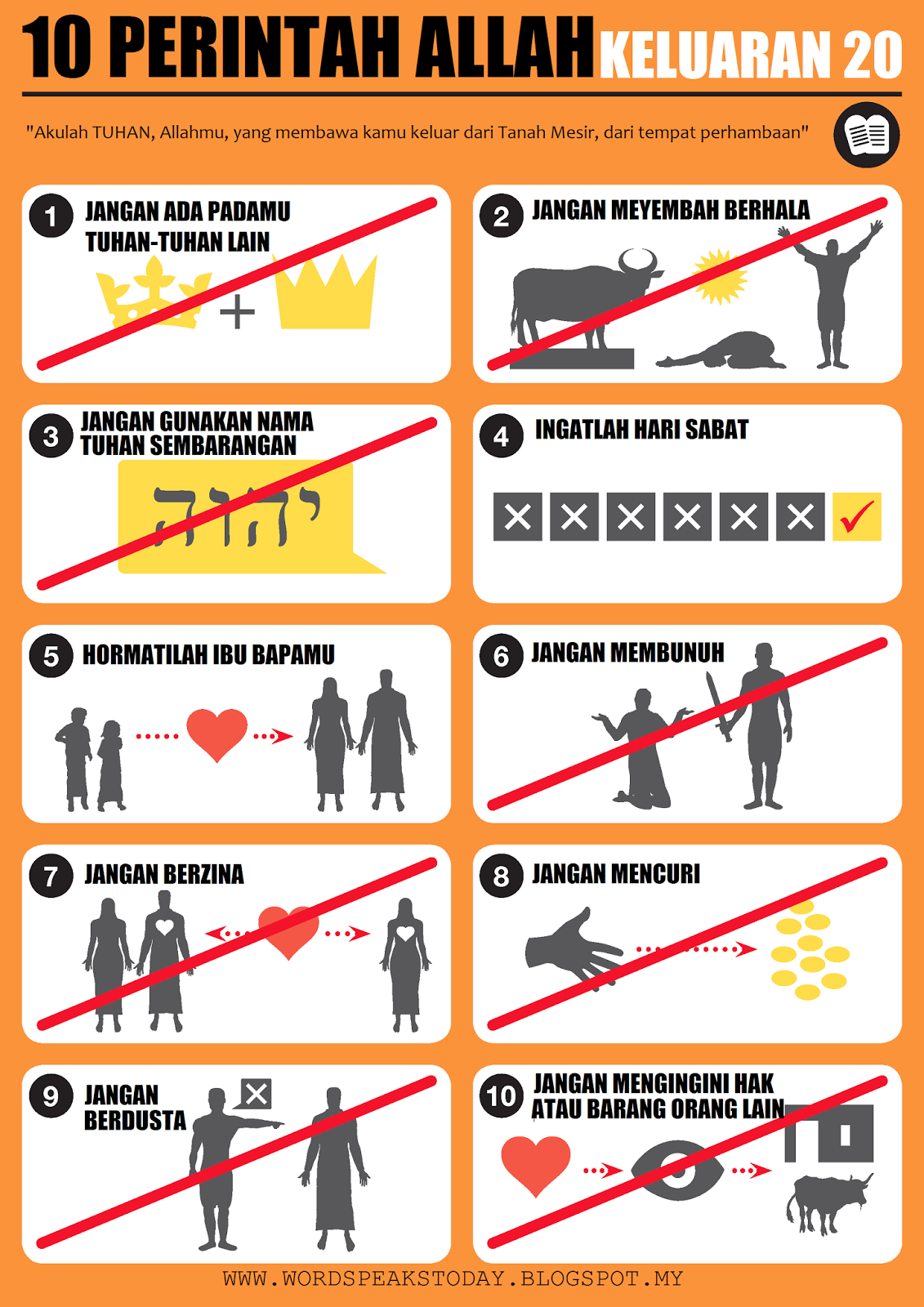
The 10 Commandments and You


The 10 Commandments and You

Commandment
Bible Example
Modern Example
RESPECT FOR GOD
You shall love the LORD your God
1. You shall have no other Gods before me.
The Exodus
Exodus 34:11-14
Put God first! Today a “god” may be anything a person allows to rule his daily life: deities of other religions, superstitions, horoscopes, bad habits or addictions, friends, heroes, desire for money, fame or power.
2. You shall not make for yourself an idol.
Golden Calf
Exodus 32:1-8
Put your faith in God only. Worshipping or serving any man-made thing that is thought to have supernatural power: statues of gods of other religions, crystals, pictures, jewellery, amulets, charms, rabbit’s foot, or objects thought to have power or “good luck.”
3. You shall not misuse the name of the LORD your God.
Don’t use God’s name in a false oath.
Leviticus 19:12
Treat God’s name with respect. Don’t use God’s name lightly in making promises or in any other way. This is the name that raised people from the dead, caused blind to see, and made the paralyzed to walk. It is a powerful name and needs to be used with the right attitude.
4. Remember the Sabbath day by keeping it holy.
God provides enough on the sixth day for the seventh.
Exodus 16:23-30
In Jesus’ time, very religious people obeyed this commandment by refusing to do any kind of work – even to the point of not helping people in need. Jesus said that Sabbath was made for man’s benefit. People should rest from their normal work, but also be available to do well to others. Today Christians set aside the day to worship God and meet with other Christians.
RESPECT FOR PEOPLE
Love your neighbour as yourself
5. Honour your father and your mother so that you may live long in the land the LORD your God is giving you.
Jesus was obedient to Mary and Joseph.
Luke 2:51
Treat your parents with respect no matter what. You parents have made many sacrifices to raise you. They have changed diapers, lost sleep, bought food, toys and clothes, paid doctor bills and changed their schedules to help you. Even if you don’t get along with your parents, they deserve your gratitude. If your parents ask you to do something wrong, respectfully tell them no and suggest a good alternative that they might consider.

6. You shall not murder.
Each person is made in God’s image.
Genesis 9:6
Personal revenge belongs to God. God will make things right in the end. God has set up governments and rules to deal with murders. Life and death are in God’s hands. Examples: no revenge killing, murder, suicide, abortion or euthanasia (mercy killing). Jesus said we should love our enemies and pray for them.
7. You shall not commit adultery.
Joseph runs from temptation.
Genesis 39:1-13
Stay true to your husband or wife. Marriage vows made before God should be kept in spite of difficulties. Sex only within marriage relationship. No rape or incest. Avoid sexual temptation: provocative videos, movies, television, magazines, computer games or programs, pictures and books. Jesus said that even thinking about another person lustfully is wrong.
8. You shall not steal.
Achan steals.
Joshua 6:17-19
Joshua 7:1-5
Respect other’s possessions. Don’t take things that don’t belong to you. Examples: shoplifting (taking candy, toys, or anything from a store), taking money or valuables from others, cheating on tests and taxes, photocopying music or any printed material without permission.
9. You shall not bear false witness against your neighbour.
Honesty toward neighbours.
Leviticus 19:13
Be trustworthy. Don’t falsely accuse or blame someone else. Don’t lie about them or to them. Don’t gossip. Don’t lie to God and to yourself by believing you are perfect. Keep your promises.
10. You shall not covet… anything that belongs to your neighbour.
Life is more than possessions.
Ecclesiastes 5:9-18; 6;12
Be content with what you have. Don’t long for things that belong to others. Examples: their house, car, job, bike, toys, jewellery, clothing, or friends. Ask God to give you what you need. He promises that He will take care of your needs! Seek wisdom and good character, not riches.

Taken from: Rose Book of Bible Charts, Maps & Time Lines (Torrance, California: Rose Publishing, Inc., 2005) pg. 57
Reproduce online for free by: Richard Angelus, blogger, Wordspeakstoday.blogspot.com

THINK BIG. START SMALL. GO DEEP.
Best Blogger Tips

They Click it A lot. [Top 7 last 7 Days]