Showing posts with label Mental Health. Show all posts

Monday, March 7, 2022

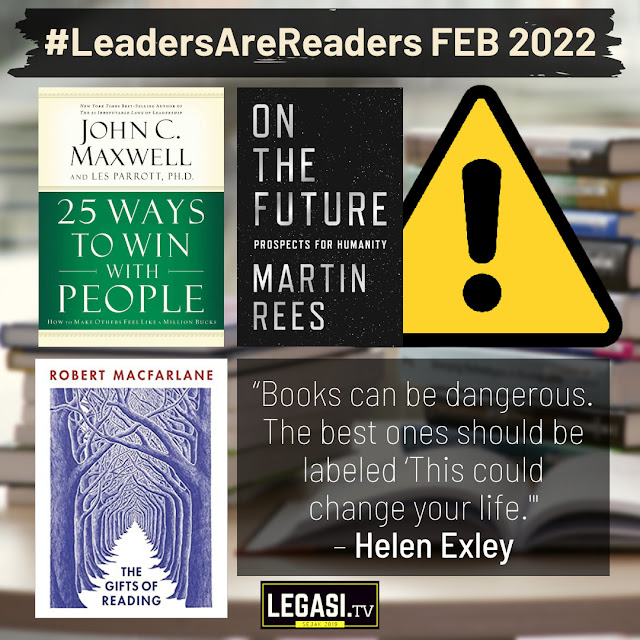
Read Books and Beat the Goldfish! #LeadersAreReaders February 2022

Currently, I’m rereading Chris Bailey’s Hyperfocus (2018). When I went to MPH Bookstore the other day, I saw a new book that interest me by Johann Hari entitled Stolen Focus (2022). But the price is so expensive, RM89.90! I understand the book business is having a hard time nowadays and in the same way, owning physical books and encouraging people to be readers is getting hard too (state libraries and discount bookstores like BookXcess are saviors for bibliophiles). Not that I cannot afford to buy the book but as I browse through the contents - besides having newer research and the author’s unique perspectives - I realize that the challenge of managing attention and focus today is the same as yesterday. No new book can claim that this is a new phenomenon. Thus, I reread Hyperfocus and settle with just listening and watching interviews of Johann Hari online… hoping that soon the State Library will have it available. Lord, have mercy.

“Reading a book requires a good deal of attention,” writes Chris Bailey, “and with attention becoming a rare commodity, fewer people can devote themselves to reading without distraction.” Attention is our most limited and constrained resource. According to Microsoft Attention Spans Research Report*, the average human attention span in 2000 is 12 seconds and in 2013, it decreased drastically to 8 seconds (I don’t know how they measure this, but the goldfish have an average attention span of 9 seconds. 1 second longer than the average human!). In today’s fast-paced world of information overload, we’re constantly flooded with social media notifications, text messages, and games. Smartphone users, like you and me, check our devices about 80 to 90 times a day. No wonder we are so distracted. This is one of the reasons for the decline of book-reading culture in Malaysia and the world in general.  We still read but read bits and pieces of information. We have amassed lots of random information but lack actual knowledge, depth, and wisdom. This is not just affecting the overall quality of our work-life (or study-life, if you’re a student) but also the state of our mental health and spirituality.

Therefore, you must cultivate a love for reading books. It helps to train you (or force you, at the beginning) to increase your attention spans. It requires attention and it improves your attention. Jessalyn Lau, from the neuroscience perspective, says: “Reading has been proven to increase your focus, attention span, concentration, and to improve memory.” Perhaps you say you don’t have time to read books. I get what you mean. You have works to do, family to care for, products to promote, etc. But “no time” is a myth. Unless you move at the speed of light and the theory of special relativity applied to you, we all have the same amount of time. It's not about you don’t have time but it's about you MAKE time. We have no problem carving out time for things we want to do. So, take or buy a book that interest you, set an uninterrupted time (10 to 15 minutes for a start) today, turn off or switch your smartphone to silent mode and put it away from your reach, make a cup of hot coffee or tea or chocolate and start reading! Start small but do it frequently. At first, you will still be easily distracted. However, over time it will become a habit. And soon, you will be proud of yourself because you have beat the goldfish attention span record! Congratulation!

*https://www.scribd.com/document/265348695/Microsoft-Attention-Spans-Research-Report  

#ServeToLead #Hyperfocus #AttentionSpans #BeatTheGoldfish #LetsMakeReadingCoolAgain

To read my book reviews of #LeadersAreReaders FEBRUARY 2022, CLICK LINKS below:

1) On the Future: Prospects for Humanity (2018) by Martin Rees https://bit.ly/OnTheFuture

2) The Gift of Reading (2016) by Robert Macfarlane https://bit.ly/MacfarlaneReading 

3) 25 Ways to Win With People (2005) by John C. Maxwell https://bit.ly/25WaysPeople 

4) The Previous book reviews https://bit.ly/1Book1Week 


FB Page: https://facebook.com/LEGASI.tv/                             
Podcast: http://bit.ly/LegasiSpotify                            
YouTube: https://www.youtube.com/c/LEGASItv/                        

THINK BIG. START SMALL. GO DEEP.

Best Blogger Tips

Friday, June 4, 2021

The Ultimate Prescription: What the Medical Profession Isn't Telling You (2010) by Dr. James L. Marcum, BOOK REVIEW

The Ultimate Prescription: What the Medical Profession Isn't Telling You (2010)
by Dr. James L. Marcum, MD (with Charles Mills)

It's hard for me to ignore this: when the vaccines available for the public, I observe many people are eager to get shots for themselves and their loved ones. Try to get themselves and family members to register online and when the website jammed, they tenaciously try and try again. "Don't give up," a mantra that I read in one of my WhatsApp groups. Then when it's time for them to take the shot, people don't mind driving early in the morning, some even from miles away and very patiently queuing the long lines. There is no laziness, very few complaints, and little need for crowd control. But something is missing here: the same eagerness doesn't apply to most people's lifestyle when it comes to physical exercise, eating right, and mental health. It seems we are more concerned with which vaccines are the best but we are ignorant about how we treat our God-given bodies, minds, and spirits.

According to the World Population Review 2019, Malaysia has the highest prevalence of obesity among adults in South-East Asia at 15.6% (the 'fattest' country in Asia). According to the WHO, the top killer in Malaysia in 2014 was coronary heart disease (still is all around the world). The most recent epidemiological data, published in 2015 by the Malaysian Ministry of Health, identified that the prevalence of mental disorders among adults was 29% (that's about 3 in 10 people). Add these data with the effects of the pandemic and the stress of quarantines, we are doom if we don't take care of our health. Dr. James Marcum, in the back cover, argues that many of the diseases sending us to doctors' offices, surgical suites, and early graves are PREVENTABLE - and we don't need to be over-medicated (not anti-medicine) to cure them. "The painful truth is that we give the disease to ourselves by the choices we make over a lifetime. We create the chronic condition that brings about the acute event by placing endless stressors on our systems - stressors that eventually do us in."

Dr. James is a behavioral cardiologist, so he outlines many good scientific evidence to back up his claims, share lots of experience with his patients to authenticate his observations, and unapologetically tackle dozen of deadly misconceptions around us today. At the same time, he writes this book from a Christian perspective and believes that although modern medicines and technologies have done so much to combat the symptoms of diseases, only God, the Great Physician, through His Word (The Bible, 'owner's manual' as he called it), is the true source of healing. By gleaning truths from the Creation Story - Genesis chapter 1 to 3 - Dr. James skillfully let us see that God had already revealed His 'Health Plan' for us that is consistent with scientific findings. Perhaps I have issues with how he interprets some texts, but overall, he is theologically (but not a theologian) sound. Besides all the usual but often neglect natural ways to increase good health, he also highlights the spiritual aspect of love and worship. As cheesy as it may sound, this remains true: "Love [of God and with one another] is the solution to our global health care dilemma. Love opens the door for us to rediscover the ultimate prescription and find healing for our minds, bodies, and spirits. Love is the ultimate treatment. It's the final step to a full, long-lasting recovery" ❤ 
#LeadersAreReaders #GrowingLeaders #TheUltimatePrescription #HealthIsWealth #LetsMakeReadingCoolAgain

[P.s: In the final sections of this book, Dr. James gives very useful information about the symptoms, diagnostic testing, and treatment of cardiovascular disease. Sweet!]

To read my other #1Book1Week book reviews on health in general, click links below 

1) Happiness Is A Choice: The Symptoms, Causes, and Cures of Depression (2007, Updated Edition) by Frank Minirth, M.D. & Paul Meier, M.D. CLICK HERE
 
2) The Clever Guts Diet: How to Revolutionize Your Body from the Inside Out (2017) by Dr Michael Mosley CLICK HERE  

3) Diet Rehab: 28 Days to Finally Stop Craving the Foods That Make You Fat (2011) by Dr Mike Dow CLICK HERE  

4) Spartan Up! A Take No-Prisoners Guide to Overcoming Obstacles and Achieving Peak Performance in Life (2014) by Joe De Sena CLICK HERE   


FB Page: https://facebook.com/LEGASI.tv/                       
Podcast: https://anchor.fm/LEGASI.tv/               
YouTube: https://www.youtube.com/c/LEGASItv/     

THINK BIG. START SMALL. GO DEEP.

Best Blogger Tips

Tuesday, May 25, 2021

Happiness Is A Choice: The Symptoms, Causes, and Cures of Depression (2007) by Minirth & Meier, Book Review


Happiness Is A Choice: The Symptoms, Causes, and Cures of Depression
 
(2007, Updated Edition) by Frank Minirth, M.D. & Paul Meier, M.D.

"Most people are about as happy as they choose to be," said Abraham Lincoln. The authors agree with him. Probably Lincoln knows best. He went through many grievances in his life - the death of a loved one, lost elections, the Civil War, and other major disappointments. According to the authors, Lincoln once was so depressed that he considered suicide. But he chooses to overcome his depression and obtained inner joy and peace. Of course, eventually, he died but not because of depression but fell victim to the bullet.

Dr. Minirth and Dr. Meier have over 30 years of experience and study human psychology, physiology, anatomy, mentality, spirituality and are said to have exercised psycho-therapeutic skills on thousands of patients. According to them, with minor exceptions like a genetic bipolar disorder, "happiness is a choice." Granted that the human mind and emotions are a very complex, dynamic system, both authors are very confident that lasting inner happiness and depression at its core is "your choice." I agree and at the same time disagree with this statement. I agree because to solve a problem you need to realize that to some extent you're in control and it is within your power to make a change in your life. Free will is God's gift, not a curse. Who chooses to dwell in the misery? Who enjoys being a victim? Who reacts destructively? Who always blames you? You! This reminds me of Jim Rohn's quote: "If you don't like how things are, change it! You're not a tree." Sometimes people unintentionally 'choose' depression due to guilt, bitterness, anger and even use it as a tool for manipulation.

But, on the other hand, I disagree. Why would anyone choose unhappiness and depression? What if there is a chemical imbalance in my brain? What if I'm born this way? (Now, this can be an excuse. But what excuse are you gonna give to those who are born intersex, for example) What about a spiritual attack? Where is the 'choice' in these? I think there are no once-for-all books that can simply answer these questions. Therefore, I'm going to be very gracious with the authors and try to understand their point of view based on their experiences as practitioners and from their Biblical perspective as Christ believers. My disagreement probably due to my lack of knowledge. But this is a true statement: most (not all) clinical depression is treatable and very likely curable. The rise of depression especially during the pandemic is worrisome and it is a very helpful book to keep us informed, be empathetic and hopefully, we will choose some new, healthy-producing attitudes and behavior patterns in our lives. "There is no single cause for all depressions, even though pent-up anger is the root cause of the vast majority of depression," writes the authors in the conclusion of this book. "[And] there is no single solution, even though faith in Jesus Christ and the principles of God's Word is at the root of all the solutions (known and unknown). The solutions may sometimes be very complex, but THEY DO EXIST!" Yes, they do exist. Have hope and faith in the sovereign God. Amen! [Ps: Don't be afraid to find help ya] ���������

#LeadersAreReaders #GrowingLeaders #HappinessIsAChoice #FightAgainstDepression #LetsMakeReadingCoolAgain

To read my other #1Book1Week Book Reviews, CLICK HERE ��� https://legasitv.blogspot.com/search/label/Book%20Review?m=1 

FB Page: https://facebook.com/LEGASI.tv/                      
Podcast: https://anchor.fm/LEGASI.tv/              
YouTube: https://www.youtube.com/c/LEGASItv/    

THINK BIG. START SMALL. GO DEEP.


Best Blogger Tips

Unplugged: How to Live Mindfully in a Digital World (2014) by Orianna Fielding, Book Review

 
Unplugged: How to Live Mindfully in a Digital World (2014) by Orianna Fielding

I'm very interested in digital psychology and the impact of digital technology on our mental health for many years now (for book and TED Talk recommendations, see lists below). And thus, the research studies and the author's personal experiences, although some of the ways she processes the information are unique, are very familiar to me. But it's good to be reminded over and over again about the dangers of digital addiction and how to overcome it. "Connectivity now permeates every area of our lives," admits Fielding, an internationally recognized designer, and curator, "Technology has enabled us to do things that ten years ago were unthinkable. It has also completely changed many of the elements that historically formed the foundation of how we lived and interacted with each other, increasingly adversely affecting the most essential and fundamental elements of being human."

Granted, every one of us thinks about technology differently and our level of relationship to it is based on our context, purpose, and personality. Let's talk about the most familiar digital technology: social media on the smartphone. For example, I don't see any intrinsic value in Twitter because either the post is too trivial (mean useless to know) or abridge (mean too short to care). But for my friend, Peter, Twitter is just right because he only wanted to know the main headline of the news. I also see Instagram as non-beneficial for me because the Algorithm is specially designed for users to post as frequently as possible and looking at mosaic photos of myself is just weird (plus, I'm not that attractive). But for a businesswoman like Sarah, Instagram is a haven for potential customers, or Jilian, a social media model, Instagram is just the right tool to showcase her beauty and beauty products. However, I love YouTube and Spotify the most because they contain wide treasures of knowledge, information, and entertainment. I spent most of my time here as opposed to any other social media. So you see, the way we choose to connect with our social media is not one-size-fits-all. But do you know what is our similarity? To some degree, all of us are ADDICTED to social media - and generally speaking, to digital technology. Like it or not, "we are living in a culture dominated by digital excess."

At the beginning of the book, Fielding outlines 12 signs of digital overload. Let me share the 6 most frequent signs, in summary: 1) Checking your digital device first thing in the morning, getting up during the night to check for messages, and regularly using some form of digital device in bed; 2) Checking your smartphone while at a meal with others; 3) Spending little time outside and often eating at your desk; 4) Getting distracted easily even when offline and finding it hard to focus fully on one task; 5) Being with family members but spending most of your time at home on a device; and 6) Wanting to stop using your smartphone and finding that you just can't, having tried repeatedly but unsuccessfully to control your internet use. If you can identify with most of these signs, then, this may be a good indicator that it might be the right time for you to unplugged, undertake a digital detox, and reboot your life. I believe it is not about letting go of digital technology altogether - in fact, if we want to progress in life, we must embrace it - but making sure that it doesn't control our lives. Fielding equips: "Unplugging is not so much a disconnection as a fine-tuning of our inner search engine. Practicing moderation by finding a workable balance between our digital connectivity and our real-life connections is the key to establishing a new digital protocol where we can be fully present in our lives while using our digital devices as the tools they were designed to be."

There are lots of tips, suggestions, and very useful digital detox ideas outline in this book. It is never mean to be taken literally but you must try it for yourself first (remember, our context, purpose, and personality are different) and modify your practices along the way. Think big, start small, go deep. Perhaps, you can join me in reading books!  #1Book1Week ��� I know you can if you read this till the end ��� It is possible! ��������� #Unplugged #DigitalDetox #LeadersAreReaders #GrowingLeaders #LetsMakeReadingCoolAgain

 Book and TED Talk recommendations:

 1) Deep Work: Rules for Focused Success In a Distracted World (2016) by Cal Newport. CLICK HERE to read my review. Watch his TED Talk too.

 2) Hyperfocus: How to Be More Productive In a World of Distraction (2018) by Christ Bailey. Watch his TED Talk too. I didn't manage to write a review for this one.

 3) Six Books on the Effect of Technology & Social Media. CLICK HERE to see my recommendations.

4) TEDx Talk: What You Are Missing While Being a Digital Zombie by Patrik Wincent https://youtu.be/TAIxb42FjwE  

5) TED Talk: Connected, But Alone? by Sherry Turkle https://youtu.be/t7Xr3AsBEK4 

6) How about documentaries? Let me suggest two - Disconnected (2017) directed by Salem Habbous https://youtu.be/MkIiMP--1h8 & The Social Dilemma (2020) directed by Jeff Orlowski on Netflix

FB Page: https://facebook.com/LEGASI.tv/                      
Podcast: https://anchor.fm/LEGASI.tv/              
YouTube: https://www.youtube.com/c/LEGASItv/    

THINK BIG. START SMALL. GO DEEP.


Best Blogger Tips

They Click it A lot. [Top 7 last 7 Days]